
Education is going through the biggest shift since the invention of the internet. With the rise of artificial intelligence, classrooms, online learning platforms, and even self-study methods are evolving faster than anyone imagined. The AI in education future is not just a theory—it’s happening right now, and students in 2025 are already experiencing its impact.
From personalized learning paths to AI tutoring tools, from group project assistance to intelligent quizzes, AI is changing how we acquire knowledge. But the real question is: how deep will these changes go, and what will education look like in the near future?

In this blog, we’ll explore 7 key transformations, weigh the pros and cons, connect with educational technology trends, and explain how students and young professionals can prepare for the future of learning.
Why AI Is a Game Changer for Education
AI is no longer a side tool—it’s becoming the backbone of modern learning. A 2025 survey shows that over 90% of university students use AI at least once a week for studying, revising, or creating projects.
Here’s why the AI in education future matters so much:
- Personalized learning means every student gets a unique experience instead of following the same rigid syllabus.
- Generative AI in education allows the creation of content like flashcards, summaries, and visual notes instantly.
- AI tutoring tools give one-on-one help, something many schools can’t provide at scale.
- Future of learning is no longer about memorization but adaptive knowledge-building.
- Educational technology trends point to immersive, interactive, and student-centered experiences.
This shift is already visible across platforms and institutions worldwide.
7 Ways AI Will Transform the Future of Education
1. Personalized Learning Paths
The most exciting part of the AI in education future is hyper-personalization. Instead of treating 30 students the same, AI designs learning paths based on strengths, weaknesses, and interests.
For example, if you’re ahead in mathematics but struggle with essay writing, the system will reduce your math workload and increase guided writing tasks. This way, personalized learning ensures no student feels left behind or bored.
👉 Related: AI language learning tools already provide adaptive exercises based on student fluency.
2. AI Tutoring Tools as Virtual Coaches
Imagine having a private tutor available 24/7. That’s exactly what AI tutoring tools promise in the AI in education future. Students can ask questions, get step-by-step explanations, and even practice interactive quizzes.
Unlike traditional tutoring, AI tutors can adapt instantly—explaining algebra with visuals for one student and storytelling for another.
👉 Example: AI for group projects shows how students already use AI to brainstorm, assign roles, and stay organized.
3. Automated Assessment and Feedback
No more waiting weeks for teachers to grade your essay. AI now provides instant evaluations with detailed feedback. Instead of simply marking an answer wrong, AI highlights why it’s wrong and suggests corrections.
This is one of the educational technology trends gaining the fastest adoption in schools. It not only saves teachers’ time but also helps students improve continuously.
👉 Related: AI cheating in education discusses how AI can also be misused, but at the same time, new tools detect plagiarism and maintain fairness.
4. AI-Generated Learning Content
Teachers and institutions can now use generative AI in education to produce slides, summaries, quizzes, and even interactive videos. Instead of spending hours preparing materials, they can focus on engaging with students.
For example, a biology teacher could ask AI to generate diagrams of the human heart, while a history professor might use it to create timelines.
👉 Related: Use AI to generate graphics for projects demonstrates how students can visualize ideas faster with AI tools.
5. Predictive Analytics for Student Success
In the future of learning, AI doesn’t just react—it predicts. By analyzing attendance, quiz performance, and engagement, AI can flag students at risk of failing before it happens.
Schools can then intervene with tutoring sessions, counseling, or custom assignments. This makes education more proactive instead of reactive.
6. Immersive & Multimodal Experiences
AI-powered educational technology trends include immersive simulations, AR/VR environments, and interactive voice assistants.
Imagine learning history by entering a VR simulation of ancient Rome or practicing science by running virtual lab experiments. Generative AI makes these experiences possible and affordable.
7. Accessibility and Global Reach
The AI in education future is also about inclusion. Students with disabilities or language barriers can now use AI tools for translation, transcription, and adaptive interfaces.

👉 Related: Fun AI websites for students include tools that make learning accessible and entertaining for everyone.
Pros and Cons of AI in Education
| Benefits | Challenges |
|---|---|
| Personalized learning for every student | Risk of over-dependence on machines |
| AI tutoring tools available anytime | Concerns over accuracy and misinformation |
| Automated grading saves teachers’ time | Potential bias in AI algorithms |
| Generative AI creates unlimited resources | Ethical debates on plagiarism and cheating |
| Accessibility for diverse learners | Data privacy and surveillance risks |
👉 To understand this balance better, see AI book summarizer tools that save time but must be used ethically.
How Fast Is This Transformation Happening?
- Market reports predict AI in education will more than double by 2025.
- Universities worldwide are integrating AI assistants in classrooms.
- Students already rely on apps that summarize textbooks, generate flashcards, and create study quizzes.
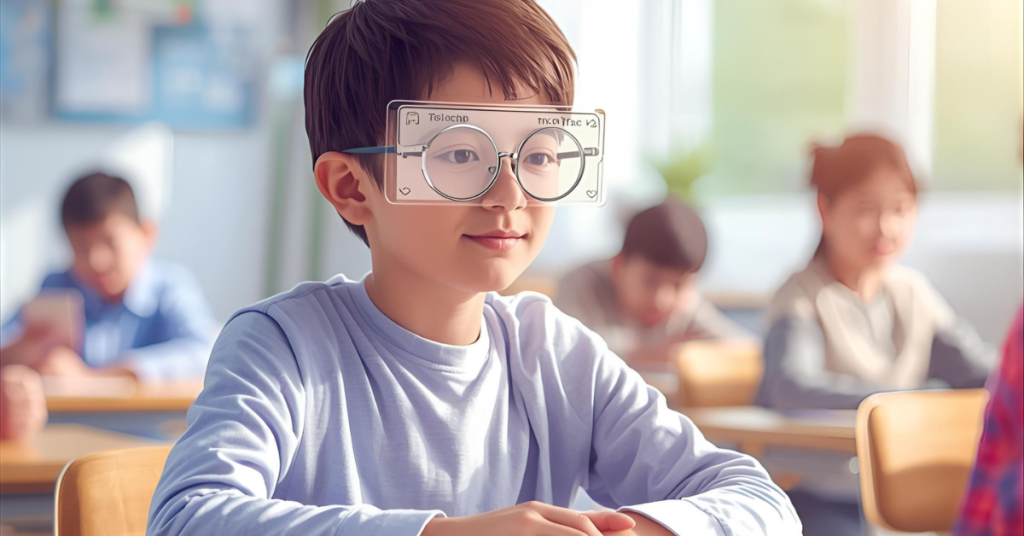
The speed of adoption shows that the AI in education future isn’t decades away—it’s already here.
How Students Can Prepare for the AI Era
- Learn prompt engineering – knowing how to ask AI the right questions.
- Use AI responsibly – let AI guide your study, not replace effort.
- Develop creativity and critical thinking – skills that machines can’t replicate.
- Explore AI tools regularly – from summarizers to quiz apps, stay updated.
- Balance AI with human learning – remember, teachers and peers provide emotional and social learning that AI cannot.
👉 Example: AI side hustles for students shows how mastering AI tools not only boosts studies but can also create income streams.
FAQs
Q1. Will AI replace teachers?
No, AI will enhance teaching, handling routine tasks while teachers focus on mentorship and creativity.
Q2. Is it ethical to use AI for homework?
Yes, if used transparently—for brainstorming, outlining, or checking work. Copy-pasting AI content is unethical.
Q3. What skills should students develop in the AI era?
Critical thinking, creativity, communication, and collaboration remain essential alongside AI literacy.
Q4. How does AI support accessibility?
It provides real-time translations, text-to-speech, and adaptive learning platforms for diverse students.
Q5. What’s the long-term impact of AI in education?
More personalized, affordable, and accessible education worldwide—but it requires responsible adoption.
Conclusion
The AI in education future is full of promise—personalized learning paths, instant feedback, immersive experiences, and global accessibility. But like every technology, it comes with responsibilities. Students must learn to balance innovation with ethics, and educators must ensure transparency and fairness.
If students and young professionals embrace AI as a partner rather than a shortcut, the future of learning will be brighter, smarter, and more inclusive.
If you enjoyed reading this blog and want more daily AI tips and productivity hacks, follow me on Instagram @galyxai and X (Twitter). I regularly share practical strategies to help students and young professionals save time and get more done every day.